
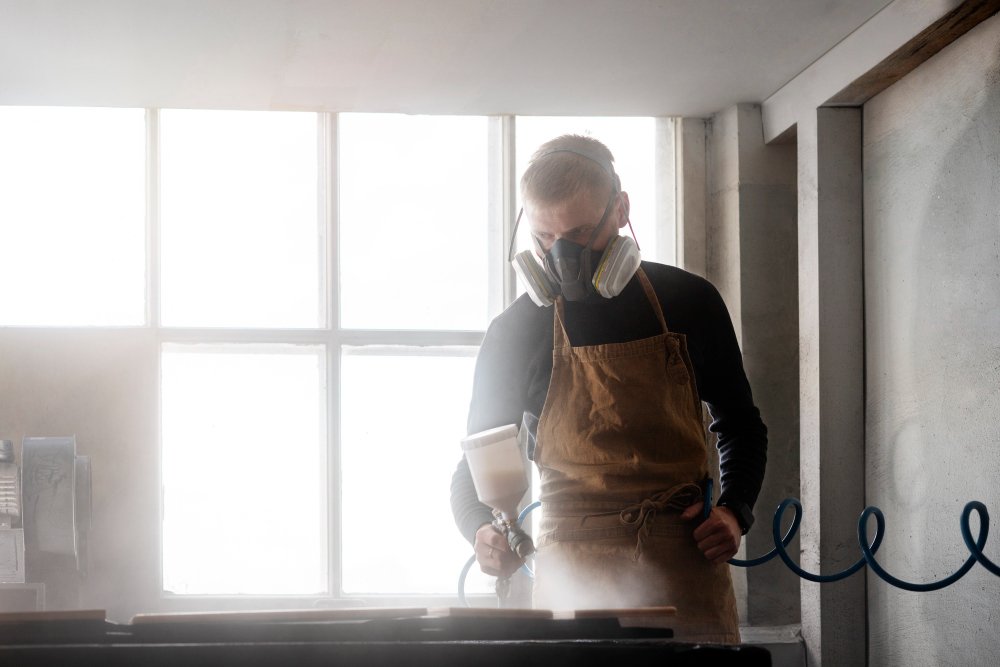
Some spaces feel branded the moment you walk in. Not because of a logo slapped on a wall, but because the identity of the business is woven into the physical environment itself. Sandblasting makes that possible in a way few other techniques can match. It transforms metal, stone, wood, and glass into surfaces that speak without making noise. This guide breaks down exactly how working with a sandblasting branding company bridges the gap between interior design and brand identity. Keep reading because the applications go far further than most business owners realize.
What Is Sandblasted Design, Exactly?
Sandblasting, also called abrasive blasting, is a technique where fine abrasive particles are propelled at high pressure onto a surface to etch, texture, or carve a pattern into it. On glass, it creates a frosted, matte effect. On stone or wood, it adds depth and dimension. The result is a design that is physically part of the surface rather than sitting on top of it, making it far more durable and visually sophisticated than printed alternatives.
How Sandblasted Designs Connect Branding to Interior Spaces
Logos Become Part of the Architecture
Printed decals peel. Paint chips. But a logo etched directly into a glass partition or stone reception wall becomes a permanent feature of the space. It carries visual weight without requiring frames or fixtures. When your brand mark is literally carved into your environment, it communicates permanence and intention in a way that no sticker or vinyl wrap ever could.
Privacy and Branding Solve Each Other Simultaneously
Modern-day open-plan offices, as well as commercial spaces, need partial privacy without any sacrifice on light. Sandblasted glass partitions deliver exactly that while doubling as a branding surface. A frosted panel etched with geometric patterns, a tagline, or a logo serves two purposes at once.
Texture Creates a Sensory Brand Experience
Branding is not only visual. When a client runs their hand across a textured sandblasted surface in your reception area or retail space, they are having a physical encounter with your brand. That tactile quality adds a layer of memorability that flat printed graphics simply cannot replicate. It makes the environment feel considered, crafted, and worth paying attention to.
Material Variety Keeps the Aesthetic Cohesive
Sandblasting works across glass, timber, granite, marble, concrete, and metal. That versatility means a single design language can be applied consistently across multiple surfaces throughout a space. A pattern etched into a glass entry door can echo across a stone feature wall and a timber reception desk, creating visual continuity that ties the whole interior together without relying on repetitive signage.
Frosted Glass Elevates Perceived Brand Quality
There is a reason high-end law firms, luxury hotels, and design studios gravitate toward etched glass over printed alternatives. Frosted sandblasted surfaces read as premium. They signal that a business has invested in its environment rather than cutting corners on presentation. For brands where perception of quality matters, the choice of material and technique communicates that value before a single conversation takes place.
Custom Patterns Reinforce Brand Personality
Every brand has a visual personality, whether minimal and precise or bold and expressive. Sandblasting translates that personality directly into architectural detail. A tech company might opt for clean geometric grid patterns etched across a glass facade. A boutique hotel might choose organic, flowing motifs carved into stone. The technique adapts to the brief rather than forcing the brief to adapt to the technique.
Longevity Makes It a Cost-Effective Branding Investment
Unlike printed graphics that need replacing as they fade or peel, sandblasted designs do not degrade with time. The etching is permanent and requires no maintenance beyond standard surface cleaning. Over a five or ten-year horizon, the cost per impression of a sandblasted design is remarkably low compared to temporary branding solutions that cycle through replacement budgets on a regular basis.
Where Sandblasted Designs Work Best in Commercial Spaces
Entry doors and lobby glass are the most common starting points, followed by meeting room partitions, feature walls, bar fronts, retail display cases, and exterior stone facades. Anywhere a brand needs to communicate quality, direct foot traffic, create privacy, or simply add visual interest to a functional surface is a candidate for sandblasted treatment.
The bottom line
Branding that lives inside the architecture of a space does not just look good. It builds familiarity, reinforces identity, and tells clients something meaningful about how a business operates. Sandblasting turns ordinary surfaces into permanent brand statements that age well and cost less over time than most alternatives. If you want your space to reflect your brand at its most confident, partnering with a skilled sandblasting branding company is where that conversation begins.
FAQs
Can sandblasted designs be applied to existing glass installations without removing them?
Indeed, most existing glass surfaces can be sandblasted by qualified experts, making it a useful update that doesn’t significantly alter the space.
How detailed can a sandblasted logo or pattern realistically be on glass?
Very detailed work is achievable with precision masking techniques, though extremely fine typography works better at larger scales for clarity and visual impact.
Is sandblasted glass easier or harder to clean than regular clear glass?
Frosted sandblasted glass requires slightly more attention since the textured surface can show fingerprints more readily, but standard glass cleaner handles it effectively.
Can sandblasting be used outdoors on building facades or exterior signage?
Absolutely. Stone, concrete, and certain metals respond very well to outdoor sandblasting, and the etched finish holds up well against weather and UV exposure.
How long does a typical commercial sandblasting project take from design approval to installation?
Most projects are completed within one to three weeks, depending on complexity, surface area, and whether work is done on-site or in a workshop.
